Mustang
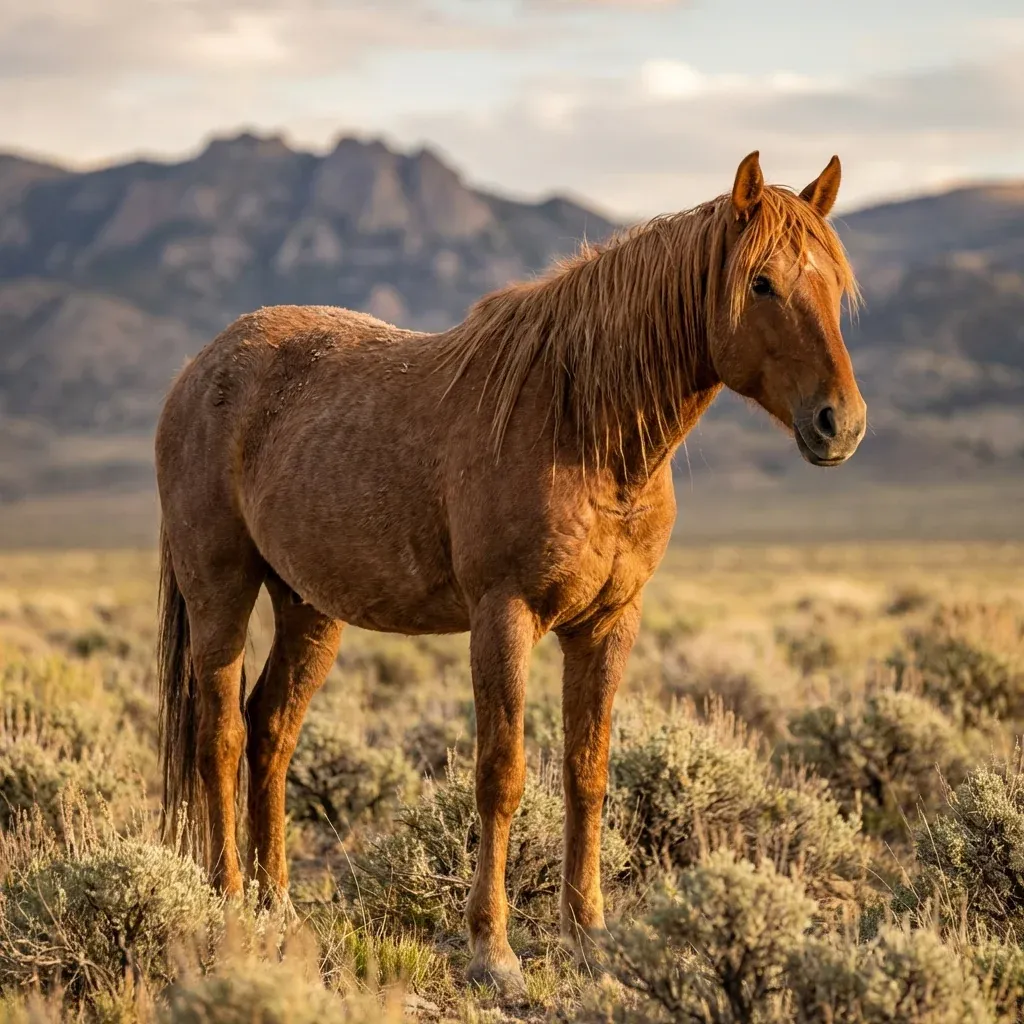
The Mustang is a free-roaming horse of the American West that first descended from horses brought to the Americas by the Spanish.
Advertisement
Overview
The Mustang is the living symbol of the indomitable spirit of the American West. Descendants of Spanish horses brought over in the 16th century, these “feral” equines have evolved through natural selection to be incredibly hardy, intelligent, and sure-footed in difficult terrain.
Origin & History
The word “Mustang” comes from the Spanish “mesteño” (unowned or wild). Although native horses in North America went extinct thousands of years ago, the Spanish reintroduction brought the horse back. Those that escaped or were released formed herds that adapted to the harsh western environment. Today, they are protected and managed by the Bureau of Land Management (BLM) in the US.
Temperament & Personality
Due to their feral nature, the Mustang is extremely observant and intelligent. They do not gift their trust, but when a bond is formed, it is unbreakable.
- Survival Instinct: They think before reacting. Unlike domestic horses that might spook blindly, a Mustang will size up the situation.
- Loyalty: Once “gentled” and connected with a human, they are often lifelong partners.
- Independence: They can be stubborn if they don’t see the point of what is asked.
Physical Characteristics
They are compact, muscular horses designed for endurance rather than pure speed.
- Height: 13-15 hands (135-152 cm).
- Weight: 700-1000 lbs (350-450 kg).
- Lifespan: 25 to 30 years (longer lived than many domestic breeds).
- Hooves: Extremely hard and durable, often needing no shoes on normal terrain.
Foal/Young Stage
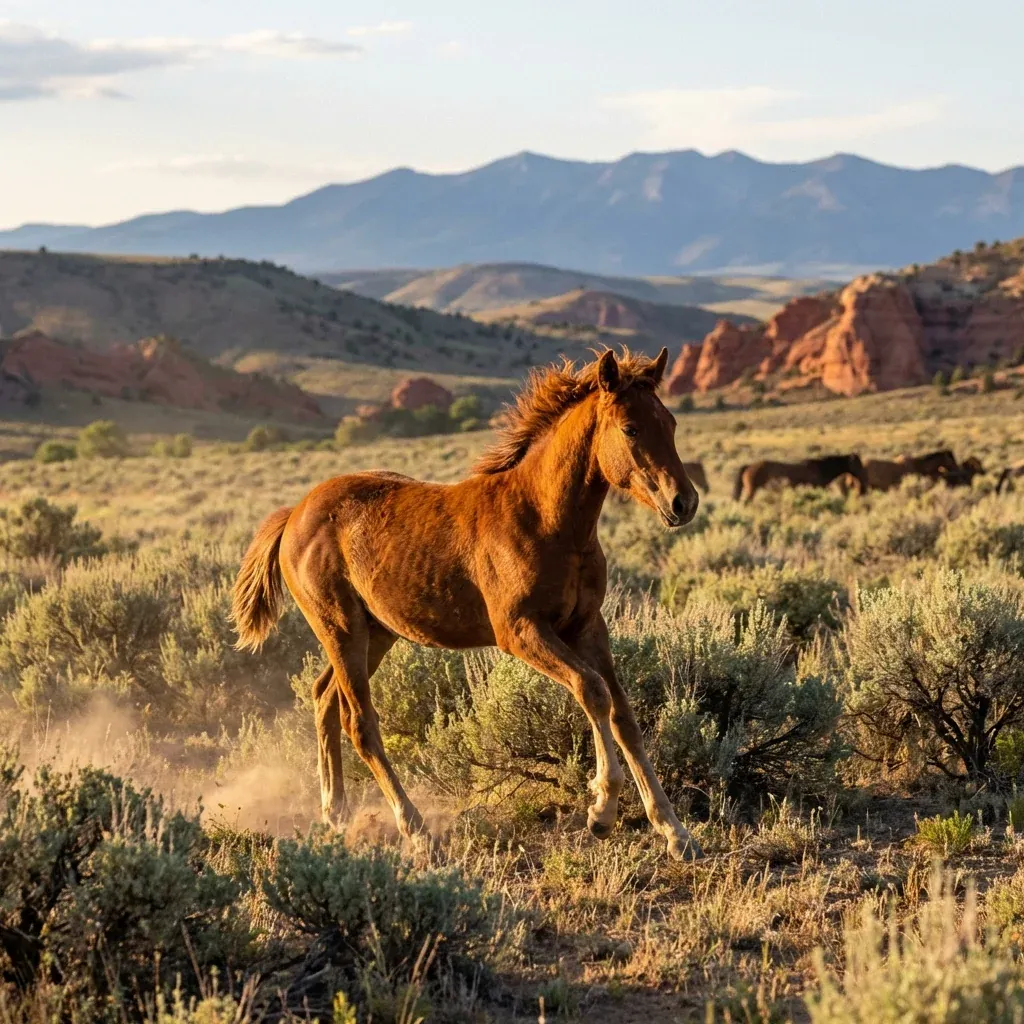
Young free-roaming Mustangs quickly learn herd hierarchies. If you adopt a young Mustang:
- Handling: Patience is key. “Gentling” should be based on pressure and release, respecting their space.
- Curiosity: They are naturally curious and learn fast if they feel safe.
Adult Stage
A trained adult Mustang is a versatile partner. Excellent for trail, endurance, and ranch work.
- Versatility: Their sure-footedness makes them ideal for mountain terrain where other horses would stumble.
- Stamina: They can maintain a moderate pace over long distances on less food and water than other breeds.
Health & Care
Natural selection has made the Mustang one of the healthiest breeds.
- Hooves: Rarely have hoof problems.
- Metabolism: They are “easy keepers,” meaning they utilize feed very well. Watch out for weight gain!
- Hardiness: Less prone to colic and common diseases found in more “refined” horses.
Needs & Routines
- Feeding: Quality forage is sufficient. They often need no extra grain unless under heavy workload.
- Grooming: Their winter coat is very dense and they need help shedding it in spring.
- Exercise: They need movement. They are not happy locked in stalls all day; they prefer living in paddocks or pastures outdoors.
Advertisement