Toy Poodle
The Toy Poodle is a small, intelligent, and elegant dog. Known for its curly coat and lively personality, it is the perfect companion for city life.

Advertisement
Overview
The Toy Poodle is the smallest version of the Poodle breed. Don’t be fooled by its size or show haircuts; beneath those curls lies an athletic, incredibly smart, and capable dog. Originally water retrievers, they retain an agility and learning capacity that surpasses many larger breeds.
Origin & History
Although frequently associated with France (where it is the national dog), the Poodle originated in Germany as a water retriever (“Pudel” means to splash in the water). The Toy variety was bred to be a companion dog for nobility and the bourgeoisie in the 18th century, but retains the intelligence of its working ancestors.
Temperament & Personality
The Toy Poodle is bright and lively. They are often said to have a “sense of humor.”
- Intelligence: They are consistently ranked as one of the smartest breeds in the world. They learn tricks and house rules almost instantly.
- Attachment: They are “velcro dogs.” They adore their humans and can suffer from separation anxiety if left alone for too long.
- Alert: They are excellent alarm dogs; they will bark if someone approaches the door.
Physical Characteristics
It is a dog of square proportions and proud carriage.
- Height: Less than 10 inches (28 cm) at the shoulder.
- Weight: 4-6 lbs (2-4 kg).
- Lifespan: 12 to 15 years (some reach 18).
- Coat: Curly, dense, and woolly. One of its great advantages is that it does not shed, making it hypoallergenic.
Puppy Stage
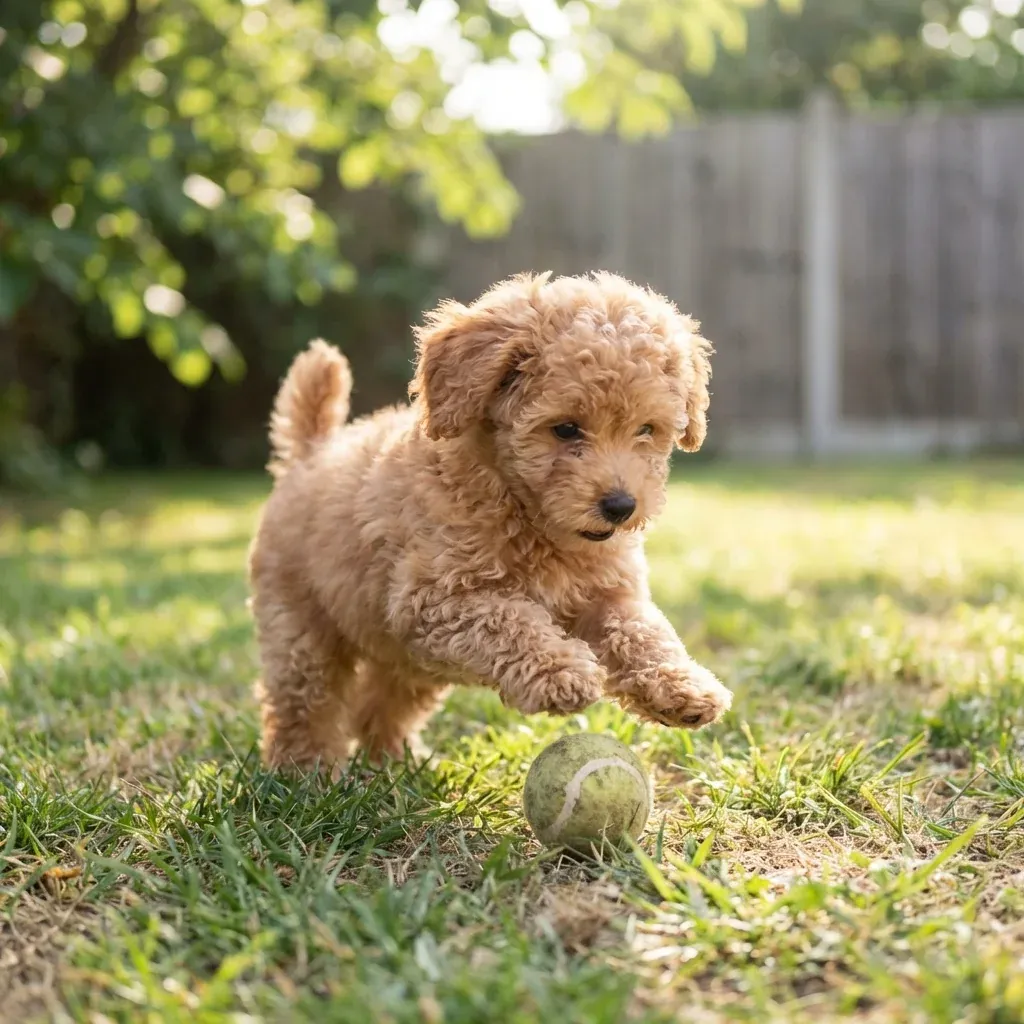
Puppies are extremely small and fragile. Care must be taken against accidental falls or crushing.
- Special Needs: Due to their small size, they can suffer from hypoglycemia (low blood sugar) if they go many hours without eating.
- Socialization: It is vital to expose them to all kinds of people and noises to avoid “small dog syndrome” (fear or defensive aggression).
Adult Stage

As adults, they remain playful and active. They are not “purse dogs”; they need to walk and run.
- Routines: Daily walks and, above all, mental games. Their brain needs as much exercise as their legs.
- Living Together: Ideal for apartments. They adapt to any space as long as they are with their family.
Health & Care
They are long-lived but prone to specific toy breed problems:
- Dental Problems: Tartar accumulates quickly in their small mouths. Brushing is mandatory.
- Luxating Patella: The kneecap slips out of place. Avoid jumping from great heights.
- Eye Problems: Cataracts and progressive retinal atrophy.
Needs & Routines
- Feeding: High-quality kibble for mini/toy breeds.
- Grooming: They require professional grooming every 4-6 weeks. Their hair never stops growing.
- Exercise: Moderate walks and lots of interactive play at home.
Advertisement