Breed Guide
Great Dane
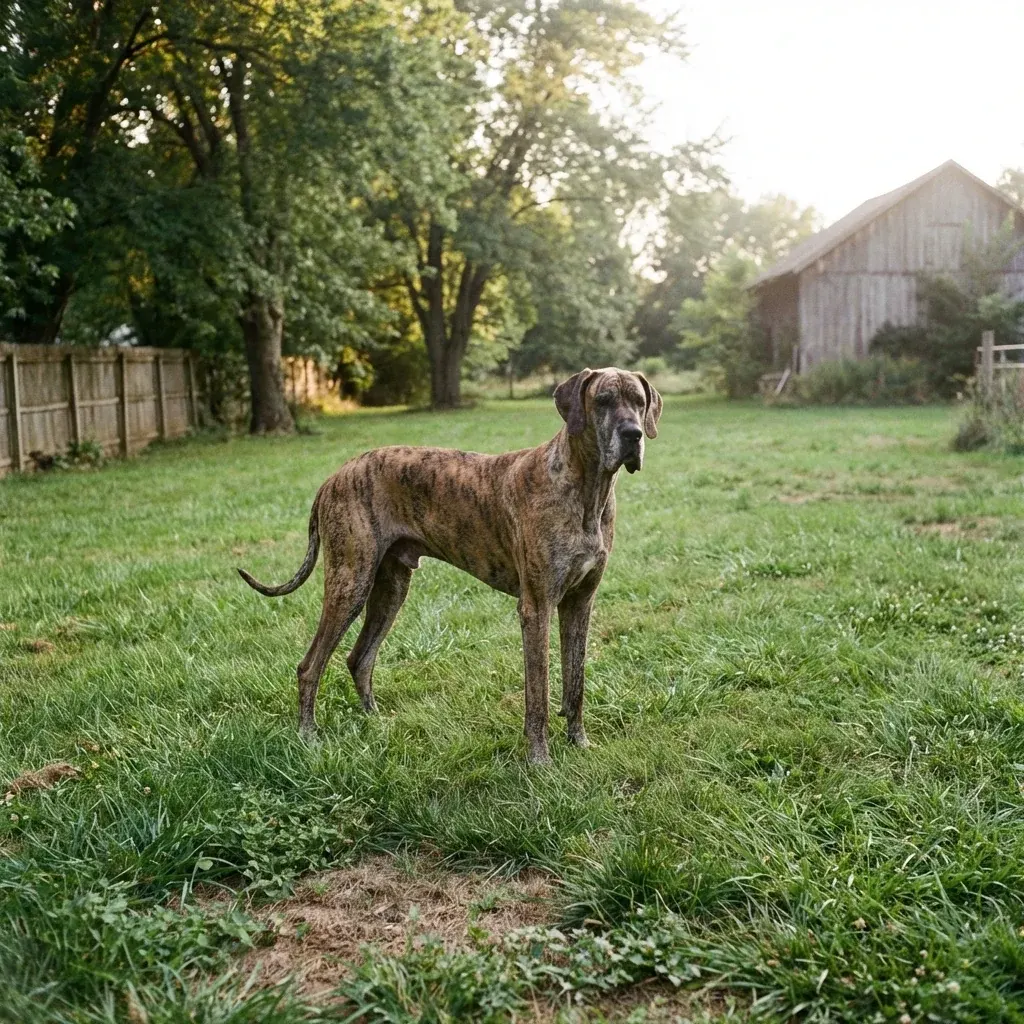
The Great Dane is the "Apollo of dogs." A gentle giant that combines elegance, power, and a huge heart.
Friendly Patient Dependable Gentle
Origin Germany
Lifespan 7-10 years
Weight 50-80 kg
Height 71-86 cm
Advertisement
Overview
Known as the “Gentle Giant,” the Great Dane is one of the largest breeds in the world. Despite its intimidating size, it is a couch potato that often thinks it’s a lap dog.
Origin & History
Originally bred in Germany (yes, not Denmark) to hunt wild boar. Their ancestors were ferocious, but centuries of selective breeding have eliminated aggression, leaving a devoted and balanced family companion.
Temperament & Personality
Their personality contrasts with their size.
- Sweetness: They are extremely affectionate and sometimes a bit clingy.
- Patience: They are usually very tolerant with children, although their tail (a happy whip) can accidentally knock over little ones.
- Courage: Their sheer presence is a deterrent, but they are rarely aggressive. They will bark to warn, not to attack.
Physical Characteristics
- Size: Immense. Males over 30 inches (80 cm) at the shoulder.
- Head: Rectangular, noble, and expressive, with drooping flews.
- Growth: They grow very fast during the first year, requiring special care.
Puppy Stage
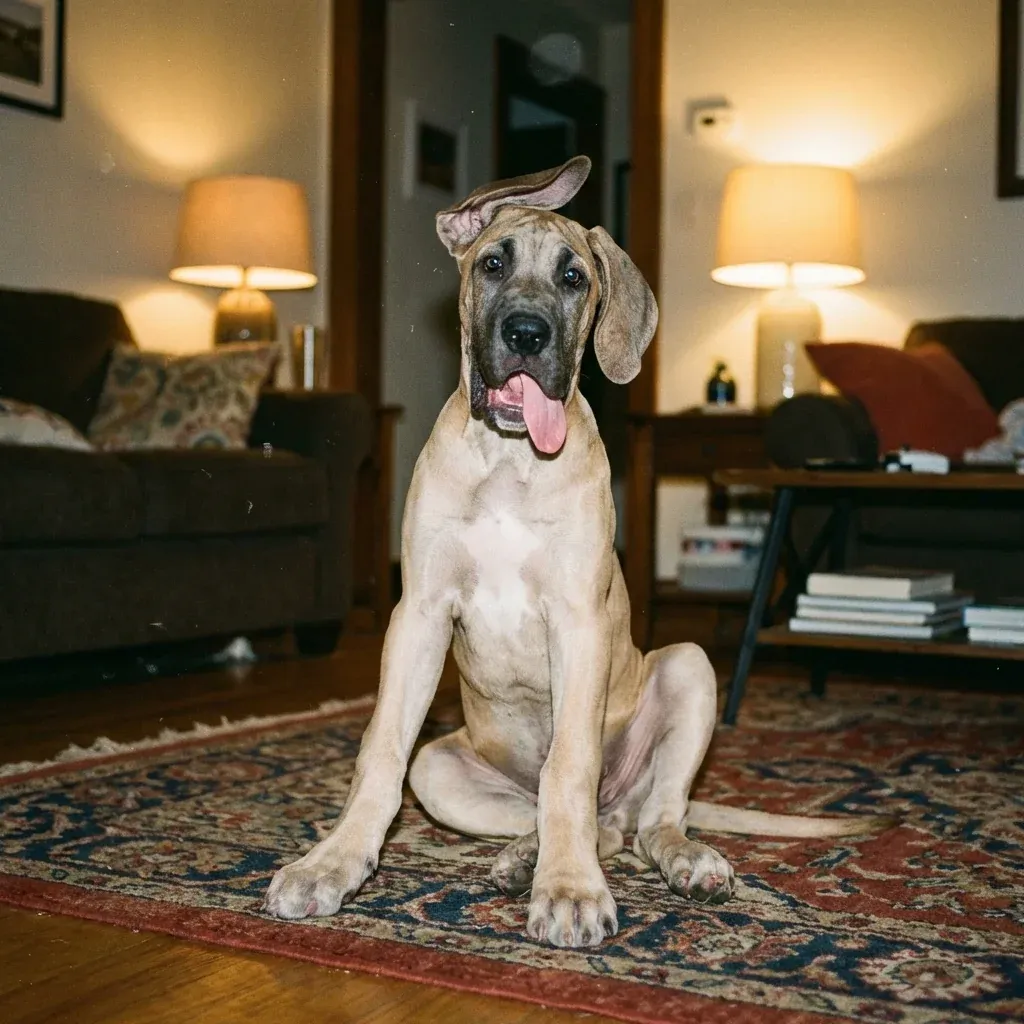
A Great Dane puppy grows at the speed of light.
- Clumsiness: They are big and clumsy. Be prepared for accidental collisions.
- Feeding: require a diet specific for giant breeds to avoid bone growth problems. Never use calcium supplements without a prescription.
Adult Stage
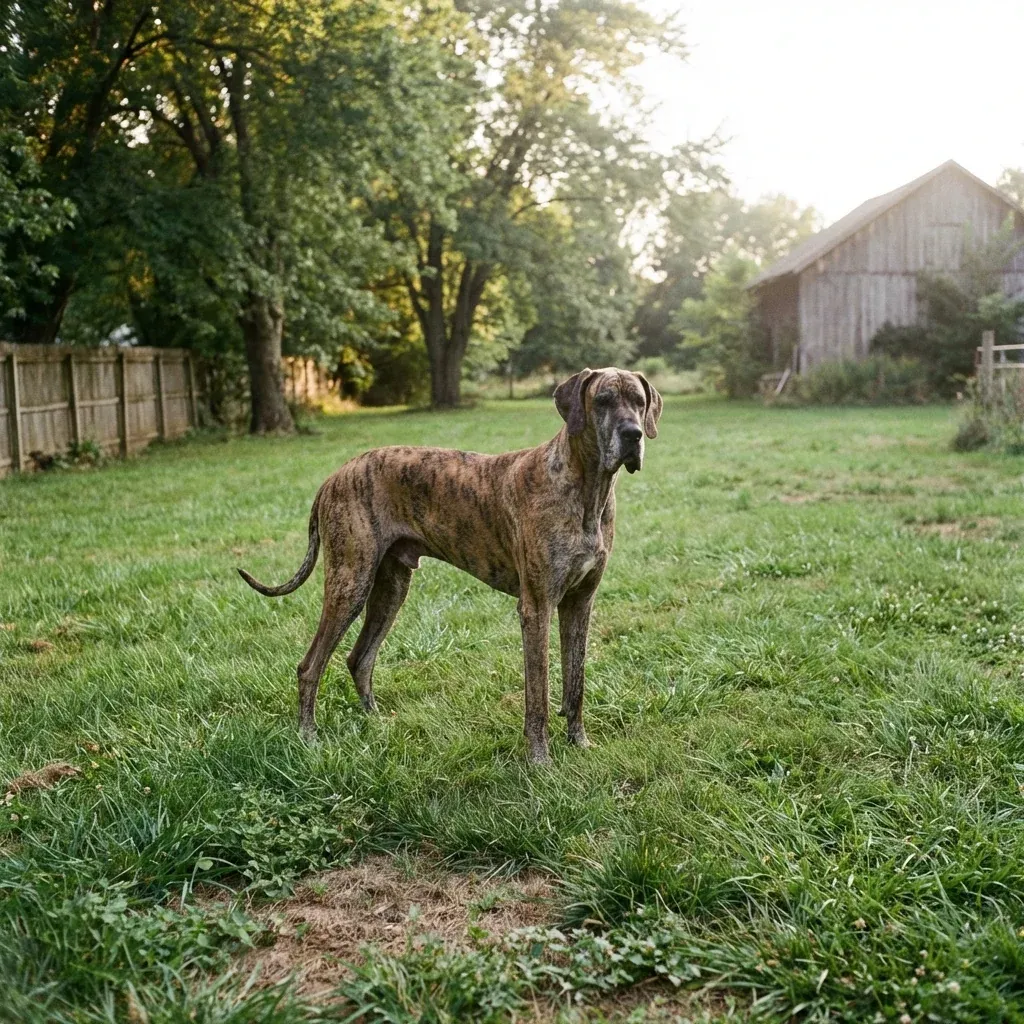
- Couch: Surprisingly, they adapt well to indoor life and are quite lazy. But you will need an XL-sized sofa!
- Health: They have a short lifespan. Cherishing every day with them is essential.
Health & Care
- Bloat (GDV): It is the #1 threat. It is vital to feed in several small meals and avoid exercise after eating. Many owners opt for preventive gastropexy.
- Heart: Dilated cardiomyopathy.
- Joints: Hip and elbow dysplasia.
Needs & Routines
- Beds: They need high-quality orthopedic beds to protect their joints from hard floors.
- Drool: Yes, they drool. Especially after drinking or eating. Keep rags handy!
Advertisement